Thyroid Nodule Ablation
- Home / Thyroid Nodule Ablation
What Are Thyroid Nodules?
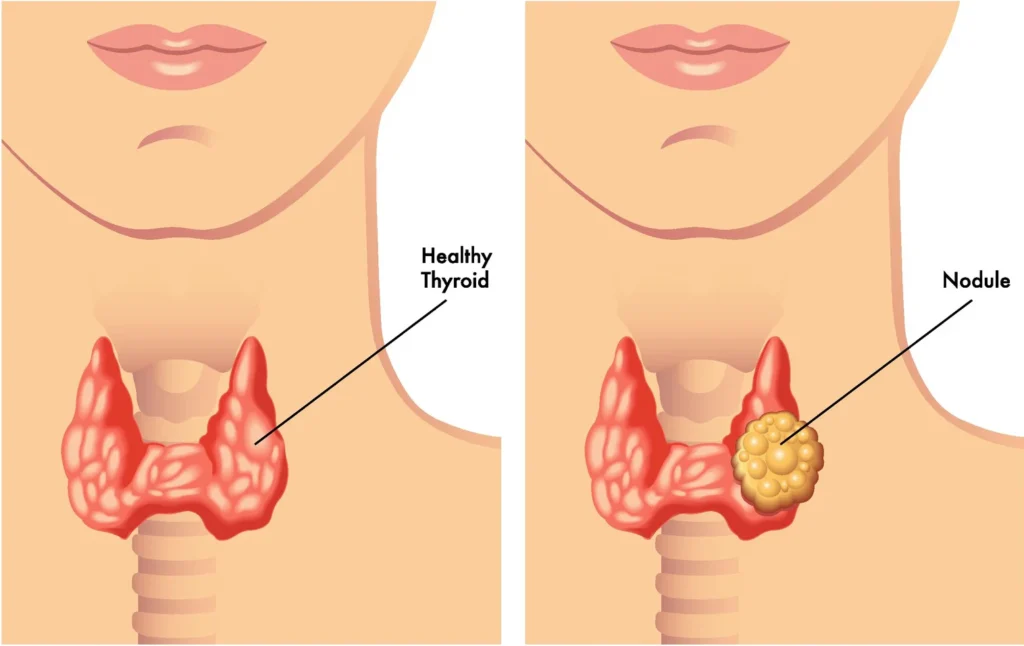
Thyroid nodules are abnormal growths or lumps that develop within the thyroid gland, a small butterfly-shaped gland located in the front of the neck. These nodules are very common and are often detected incidentally during imaging or routine health check-ups.
Most thyroid nodules are benign (non-cancerous) and may not cause symptoms initially. However, as they grow, they can lead to visible neck swelling, discomfort, or pressure-related symptoms. In some cases, nodules may affect thyroid hormone production, leading to hormonal imbalance.
Thyroid Nodules
Thyroid nodule ablation may be advised for patients whose nodules cause symptoms or cosmetic concerns that affect daily life or well-being.
Common symptoms include
- A visible or palpable lump in the neck
- Neck discomfort or pressure
- Difficulty swallowing or a choking sensation
- Change in voice or hoarseness
- Symptoms related to excess thyroid hormone in selected cases
Why Patients Prefer Thyroid Nodule Ablation
- No surgical incision or visible scar
- No removal of the thyroid gland
- Usually performed under local anesthesia
- Faster recovery and same-day discharge in most cases
- Preserves thyroid function in the majority of patients
Why Choose Thyroid Nodule Ablation at Vikash IR Clinic?
At Vikash IR Clinic, thyroid nodule ablation is considered only after a thorough imaging-based evaluation confirms that it is the right treatment option. Dr. Vikash Chennur is a senior Interventional Radiologist and an AIIMS Gold Medalist, with extensive experience in advanced image-guided, minimally invasive therapies. He has trained and worked across leading institutions in India and internationally, bringing global best practices to patient care.
Preserve Your Thyroid. Treat the Nodule.
Most thyroid nodules are benign—and many do not require removal of the thyroid gland. With thyroid nodule ablation, it is now possible to treat the problematic nodule using a minimally invasive, image-guided procedure, without a surgical scar on the neck and without prolonged recovery. For suitable benign nodules, ablation offers effective symptom relief while preserving normal thyroid tissue.
When Surgery Is Not the Only Option
Surgery is no longer the default choice for patients with biopsy-proven benign thyroid nodule. A detailed ultrasound-based evaluation can identify patients for a thyroid-preserving, minimally invasive ablation approach.
Procedure Overview & Recovery Timeline
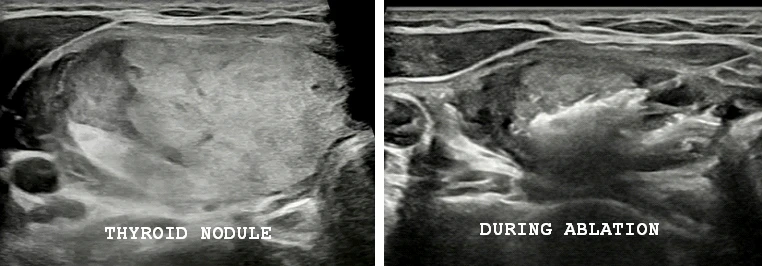
Thyroid nodule ablation is performed through a needle-based, image-guided technique, without any surgical incision. Under ultrasound guidance, a thin probe is inserted into the thyroid nodule, and controlled energy is delivered to ablate the nodule tissue.
For predominantly cystic or fluid-filled thyroid nodules, a specialised technique called ethanol (alcohol) ablation may be used. Under ultrasound guidance, the cyst fluid is first aspirated and a small amount of medical alcohol is then instilled into the cavity to destroy the cyst lining and prevent recurrence.
The procedure is typically performed under local anesthesia and lasts about 30–60 minutes. Recovery is quick, with most patients returning to normal activities within one to two days. The treated nodule gradually decreases in size over the following weeks.
Know Your Options Before Choosing Surgery
Frequently Asked Questions About Thyroid Nodule Ablation
MRI is recommended when you experience persistent pain, neurological symptoms, or unexplained changes in your body. It helps doctors identify the exact cause and plan accurate treatment with clear internal imaging.
1. What is thyroid nodule ablation?
Thyroid nodule ablation is a minimally invasive, image-guided procedure used to treat benign thyroid nodules. Instead of removing the thyroid gland, the procedure precisely targets and treats only the nodule, allowing it to shrink gradually over time.
2. Why choose ablation instead of surgery?
Unlike surgery, thyroid nodule ablation:
- Preserves the thyroid gland
- Avoids a visible neck scar
- Does not usually require general anesthesia
- Allows faster recovery and early return to normal life
For suitable benign nodules, ablation offers effective symptom relief without overtreatment.
3. Who is a good candidate for thyroid nodule ablation?
You may be a suitable candidate if you have:
- A biopsy-confirmed benign thyroid nodule
- Increasing nodule size
- Pressure symptoms, discomfort, or cosmetic concerns
- A preference to avoid surgery and thyroid removal
- Predominantly cystic (fluid-filled) benign thyroid nodules suitable for alcohol ablation
A detailed imaging and clinical evaluation is essential to confirm eligibility.
4. Is thyroid nodule ablation safe?
Yes. When performed by an experienced Interventional Radiologist and in appropriately selected patients, thyroid nodule ablation has a strong safety profile and avoids many risks associated with open surgery.
5. Will the thyroid nodule be completely removed?
The nodule is not surgically removed. Instead, the treated tissue shrinks gradually over weeks to months, leading to improvement in symptoms and appearance.
6. Will I need surgery after ablation?
Most patients do not require surgery after successful ablation. In very large nodules or if symptoms persist, additional ablation sessions or surgery may be considered.
7. Will thyroid hormone levels be affected?
In most cases, thyroid function is preserved because ablation treats only the nodule while sparing healthy thyroid tissue.
8. Is the procedure painful?
The procedure is generally well tolerated. Mild discomfort or pressure may be felt during or shortly after the treatment and is usually managed with simple medications
9. How long does the procedure take?
Thyroid nodule ablation typically takes 30–60 minutes and is usually performed under local anesthesia (± mild sedation).
10. How soon can I return to normal activities?
Most patients return to normal daily activities within 1–2 days. There is no prolonged downtime or hospital stay in most cases.
11. Can the nodule come back after ablation?
Treated nodules usually continue to shrink, and recurrence is uncommon after complete ablation. Very large nodules may require staged treatment.
12. Who performs thyroid nodule ablation?
Thyroid nodule ablation is performed by an Interventional Radiologist, a specialist trained in image-guided, minimally invasive therapies.