
Prostate Artery Embolization
- Home / Prostate Artery Embolization
What Is Prostate Artery Embolization?
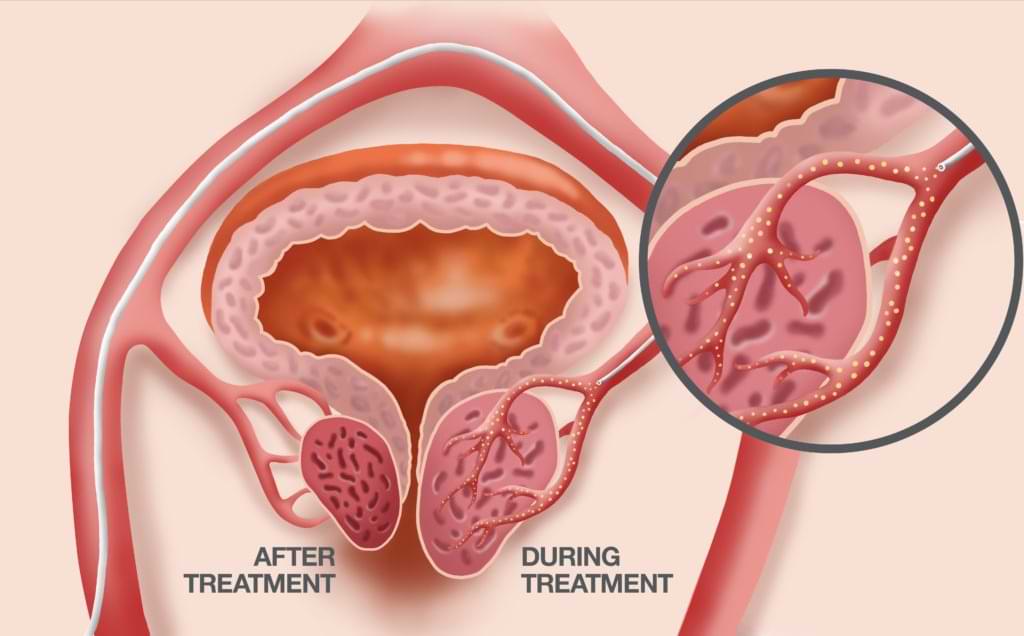
Prostate Artery Embolization (PAE) is a minimally invasive, image-guided procedure used to treat urinary symptoms caused by benign prostatic hyperplasia (BPH), commonly known as an enlarged prostate. The procedure is performed by an Interventional Radiologist using real-time imaging for precise, targeted treatment.
PAE works by selectively reducing blood flow to the prostate, causing it to shrink gradually over time. There is no cutting, scraping, or removing prostate tissue. As the prostate size reduces, pressure on the urinary tract decreases and urinary symptoms improve—without removing the prostate and without surgery.
Enlarged Prostate
For many years, surgery was considered the default treatment for an enlarged prostate. PAE treats the prostate differently from surgery—and that difference matters.
Common symptoms of BPH
- Frequent urination, especially at night
- Weak or interrupted urine stream
- Difficulty starting urination
- Feeling of incomplete bladder emptying
- Urgency to urinate
- Urinary retention in advanced cases
Why Patients Prefer Thyroid Nodule Ablation
- No surgery and no prostate removal
- Lower risk of sexual side effects
- Local anesthesia instead of general anesthesia
- Faster recovery and minimal downtime
- Suitable for large prostates
- Preserves future treatment options
Why Choose Prostate Artery Embolization in Bangalore at Vikash IR Clinic?
At Vikash IR Clinic, Bangalore, prostate artery embolization is offered only after a thorough clinical and imaging-based evaluation confirms that it is the most appropriate treatment option.
PAE is performed by Dr. Vikash Chennur, a senior Vascular Interventional Radiologist in Bangalore and an AIIMS Gold Medalist, with extensive experience in advanced image-guided, minimally invasive procedures.
Care is coordinated with urologists when required, ensuring a collaborative, patient-centred approach focused on safety, symptom relief, and long-term outcomes.
Procedure Overview & Recovery Timeline
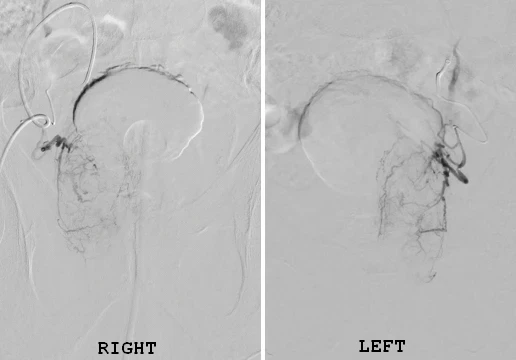
Prostate artery embolization is performed through a small puncture in the wrist or groin, not through the urinary passage. Under real-time imaging guidance, a thin catheter is navigated to the arteries supplying the prostate. Tiny embolic particles are then delivered to selectively reduce blood flow.
- Procedure duration: approximately 1–2 hours
- Anaesthesia: local anesthesia with mild sedation
- Hospital stay: usually same-day discharge or overnight observation
Recovery is generally smooth. Mild pelvic discomfort, urinary frequency, or burning sensation may occur temporarily and are managed with medications. Most patients return to normal daily activities within 2–3 days. Improvement in urinary symptoms typically begins within weeks and continues over several months.
Struggling with urinary symptoms due to an enlarged prostate Explore if PAE is right for you.
Explore if PAE is right for you
Frequently Asked Questions About Prostate Artery Embolization
MRI is recommended when you experience persistent pain, neurological symptoms, or unexplained changes in your body. It helps doctors identify the exact cause and plan accurate treatment with clear internal imaging.
1. What is prostate artery embolization?
PAE is a minimally invasive, image-guided procedure that treats enlarged prostate by reducing its blood supply, leading to gradual shrinkage and symptom improvement.
2. Is PAE a surgical procedure?
No. PAE is a non-surgical treatment performed through a small needle puncture, without prostate removal or incisions.
3. Who is a good candidate for PAE?
Men with moderate to severe urinary symptoms due to BPH, especially those wishing to avoid surgery or who are poor surgical candidates, may be suitable after evaluation.
4. How is PAE different from prostate surgery?
PAE does not remove prostate tissue or involve the urinary passage. It is image-guided, minimally invasive, and typically has faster recovery and fewer sexual side effects.
5. Will PAE affect sexual function?
PAE has a lower risk of sexual side effects as compared to surgery. Individual outcomes vary and should be discussed during consultation.
6. Is prostate artery embolization painful?
Most patients experience minimal discomfort during the procedure which is easily managed with medications
7. How long does it take to see improvement after PAE?
Many patients notice improvement within a few weeks, with continued improvement over several months.
8. How long is the recovery period?
Most patients resume normal daily activities within 2–3 days.
9. Can PAE be done for very large prostates?
Yes. PAE is often well suited for large prostates, including cases where surgery carries higher risk.
10. Is PAE available in Bangalore?
Yes. Prostate artery embolization is available in Bangalore at Vikash IR Clinic, performed by a Interventional Radiologist after detailed evaluation.