Non Surgical Treatments Possible Through Interventional Radiology That Once Required Surgery
For decades, surgery was the default solution for many medical conditions—from blocked blood vessels to tumors, fibroids, and internal bleeding. Large incisions, general anesthesia, long hospital stays, and weeks of recovery were considered unavoidable.
Today, interventional radiology has changed that reality.
Using advanced imaging and minimally invasive techniques, interventional radiology allows doctors to treat many conditions without open surgery, often through a tiny pin-hole entry. These treatments deliver surgical-level results while reducing risk, pain, and recovery time for patients.
What Makes Interventional Radiology Non Surgical
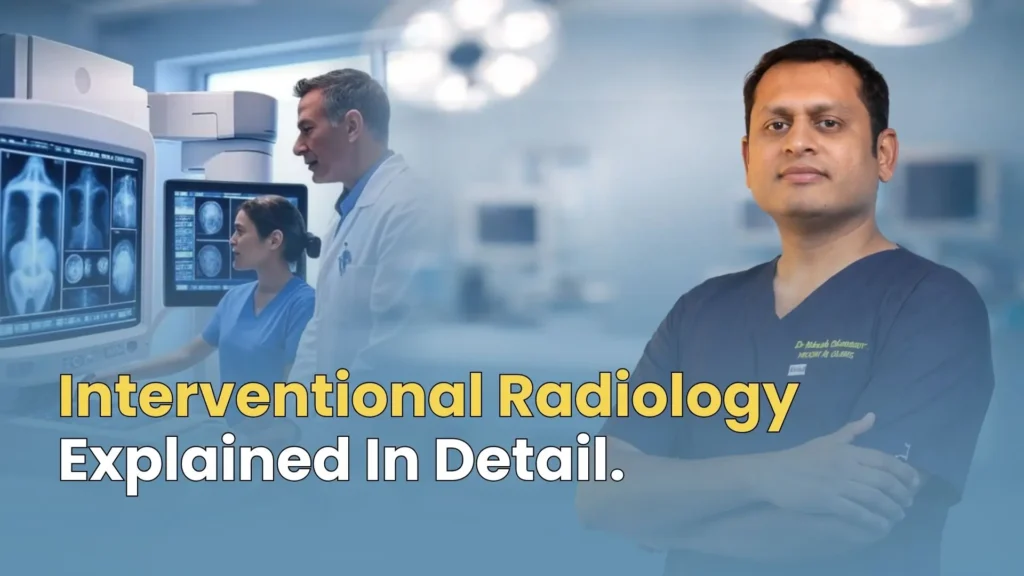
Interventional radiology is a medical specialty that uses real-time imaging such as ultrasound, CT, and X-ray to guide needles, wires, and catheters inside the body to treat disease.
Instead of cutting through tissue to reach a problem, interventional radiologists navigate internally, targeting the exact source of disease while preserving healthy structures.
This approach has replaced or reduced the need for surgery in many conditions.
Common Surgical Problems Now Treated Non Surgically
1. Blocked Arteries and Veins
Previously surgical:
Bypass surgery for blocked arteries.
Interventional radiology option:
Angioplasty and stenting.
Using catheter-based techniques, interventional radiologists open narrowed or blocked blood vessels from inside the artery. This restores blood flow without chest or limb surgery, significantly reducing recovery time and complications.
2. Uterine Fibroids
Previously surgical:
Hysterectomy or myomectomy.
Interventional radiology option:
Uterine fibroid embolization.
Through a small artery puncture, blood supply to fibroids is blocked, causing them to shrink over time. The uterus is preserved, and recovery is much faster than surgery.
3. Thyroid Nodules
Previously surgical:
Partial or total thyroid removal.
Interventional radiology option:
Thyroid nodule ablation.
Benign thyroid nodules can be treated using radiofrequency or microwave ablation under ultrasound guidance, avoiding neck scars, hospital admission, and lifelong thyroid medication in many cases.
4. Thyroid Goitre and Selected Thyroid Conditions
Previously surgical:
Partial or total thyroid removal (thyroidectomy).
Interventional radiology option:
Thyroid artery embolisation.
Thyroid artery embolisation is a minimally invasive, image-guided procedure used in selected patients with large symptomatic goitre, hypervascular benign thyroid nodules, recurrent goitre after surgery, and certain cases of hyperthyroidism. By selectively reducing the blood supply to the thyroid gland, the procedure helps shrink the gland and relieve pressure-related symptoms such as neck fullness, difficulty swallowing, or breathing discomfort. It can be particularly useful for patients in whom surgery carries a higher risk, while avoiding neck scars, major surgery, and prolonged hospital admission.
5. Tumors in Liver, Kidney, and Lung
Previously surgical:
Open or laparoscopic tumor removal or transplantation.
Interventional radiology options:
- Tumor ablation
- Chemoembolization
- Radioembolization
Interventional radiology allows targeted destruction of tumors while sparing healthy tissue, especially useful in patients who are not surgical candidates.
6. Internal Bleeding
Previously surgical:
Emergency exploratory surgery.
Interventional radiology option:
Emergency embolization.
Using imaging guidance, interventional radiologists can locate and stop bleeding vessels quickly, often saving lives without surgery—especially in trauma and post-operative bleeding.
7. Gallbladder and Bile Duct Obstruction
Previously surgical:
Open drainage or bypass surgery.
Interventional radiology option:
Percutaneous biliary drainage and stenting.
These procedures relieve jaundice and infection without major abdominal surgery, particularly in high-risk or cancer patients.
8. Kidney and Urinary Tract Blockage
Previously surgical:
Open urinary diversion procedures.
Interventional radiology option:
Nephrostomy and ureteric stenting.
Urine flow is restored using image-guided tubes or stents, often as a temporary or long-term solution without surgery.
9. Chronic Pain Conditions
Previously surgical:
Spine or nerve surgeries in selected cases.
Interventional radiology option:
Image-guided nerve blocks and injections.
Targeted pain relief can be achieved with precision, often avoiding unnecessary surgical intervention.
Why is Interventional Radiology Reducing the Need for Surgery in Many Cases
The success of interventional radiology lies in its advantages:
- No large incisions
- Local anesthesia or light sedation
- Short hospital stays or same-day discharge
- Faster recovery
- Lower infection risk
- Reduced pain and scarring
- Safer for elderly or medically fragile patients
In many scenarios, interventional radiology offers outcomes comparable to surgery with significantly less physical stress on the body.
Interventional Radiology and Surgery Work Together
It is important to understand that interventional radiology does not replace surgery entirely. Instead, it expands treatment options.
In modern healthcare, surgeons and interventional radiologists collaborate closely to determine:
- Whether a non surgical interventional radiology approach is possible
- When surgery is truly necessary
- How both approaches can complement each other for optimal outcomes
When Should Patients Ask About Interventional Radiology
Patients should consider asking about interventional radiology if:
- Surgery has been recommended
- They are high-risk for anesthesia or surgery
- Faster recovery is important
- A minimally invasive option is preferred
In many cases, a non surgical alternative may exist that patients are not initially aware of.
The Future of Non Surgical Treatment
As technology advances, interventional radiology continues to expand its role in treating complex conditions without surgery. Precision, safety, and patient comfort are at the center of this evolution.
For patients, this means more choices, better recovery, and effective treatment without the burden of major surgery.
About the Author
Dr Vikash Chennur is the Founder and Medical Director of Vikash IR Clinic, Bangalore.
He completed his MD Radiology at the prestigious All India Institute of Medical Sciences, New Delhi, where he was awarded the Gold Medal by Manmohan Singh in 2009 for being the best radiology postgraduate resident.
Dr Chennur has completed fellowships in Vascular and Interventional Radiology from the University of Ottawa and Body (Abdominal) Imaging from the University of Calgary. He also holds FRANZCR and EBIR qualifications, reflecting extensive international expertise in interventional radiology.