Leg Pain and Swelling: Is It Varicose Veins?
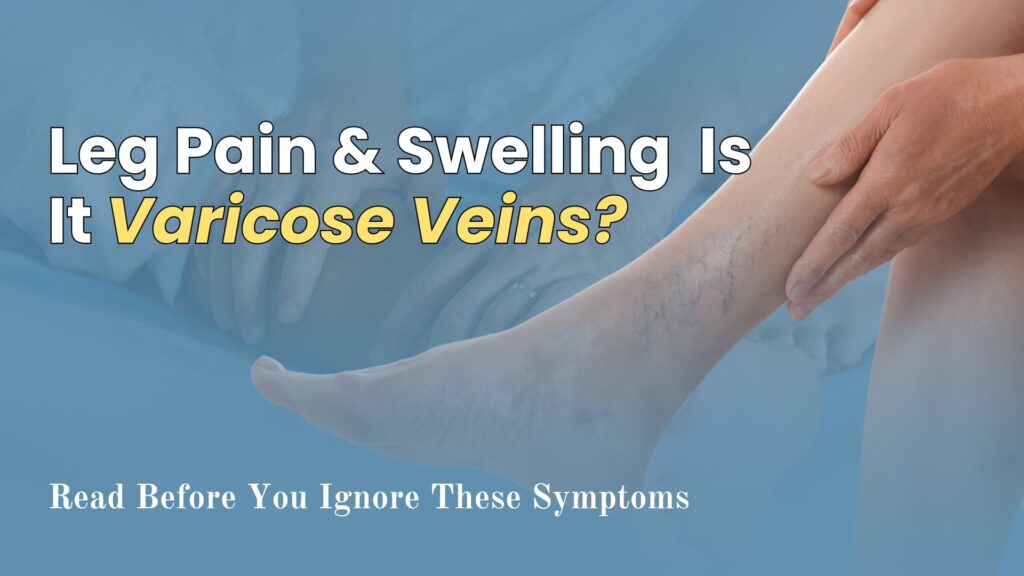
Symptoms, Causes, Diagnosis, and Treatment Options
Leg pain and swelling are common complaints and are often dismissed as normal tiredness after long hours of standing, sitting, or physical activity. While this is sometimes true, persistent or recurring leg discomfort may indicate an underlying vein problem such as varicose veins.
Understanding the difference between simple leg fatigue and vein-related disease is important. This guide explains what varicose veins are, who is at risk, how they are diagnosed, and whether surgery is always required.
What Are Varicose Veins?
Varicose veins are enlarged, swollen, and twisted veins, most commonly seen in the legs. Veins carry blood from the legs back to the heart, working against gravity with the help of one-way valves.
When these valves weaken or fail:
- Blood pools in the veins
- Pressure builds up
- Veins stretch, enlarge, and become visible
These lead to the development of varicose veins.
Is Leg Pain and Swelling Always Due to Varicose Veins?
No. Leg pain and swelling can occur due to:
- Muscle strain or joint problems
- Fluid retention
- Other circulation or lymphatic conditions
Varicose veins are more likely when pain and swelling are accompanied by visible vein changes and symptoms that follow a typical pattern.
Common Symptoms of Varicose Veins
People with varicose veins may experience:
- Visible bulging or twisted veins
- A feeling of heaviness or tiredness in the legs
- Aching, throbbing, or burning pain
- Swelling around the ankles or lower legs
- Symptoms that worsen after prolonged standing or sitting
- Relief with leg elevation or rest
- Skin itching, discoloration, or dryness in advanced stages
Some individuals notice visible veins first, while others experience symptoms before veins become obvious.
Do Varicose Veins Affect Only Older People?
No. Varicose veins can develop at any age, including in young adults.
Risk factors in younger people include:
- Desk jobs or prolonged standing
- Lack of regular exercise
- Weight gain
- Hormonal changes
- Family history of vein disease
Early symptoms are often mild and overlooked, allowing the condition to progress gradually.
How Do Varicose Veins Develop?
Varicose veins develop due to increased pressure within leg veins, caused by:
- Prolonged standing or sitting
- Reduced physical movement
- Increased body weight
- Weak vein valves
- Genetic predisposition
- Hormonal influences
Over time, veins lose their ability to efficiently return blood to the heart, leading to vein enlargement and swelling.
Who Is at Higher Risk?
Varicose veins are more common in:
- People with a family history of vein disease
- Women, especially during and after pregnancy
- Individuals who are overweight
- Those whose jobs involve long hours of standing
- Older adults
Having risk factors increases the likelihood but does not guarantee disease.
How Are Varicose Veins Diagnosed?
Diagnosis begins with a clinical examination and symptom assessment. A Doppler ultrasound is usually recommended.
This is a painless test which:
- Evaluates blood flow
- Checks valve function
- Maps abnormal veins
- Rules out blood clots
Ultrasound is essential for accurate diagnosis and treatment planning.
Which Doctor Should You Consult?
Patients with persistent leg pain, swelling, or visible varicose veins should consult an Interventional Radiologist. Interventional radiologists specialise in ultrasound-guided, minimally invasive treatments such as laser ablation, radiofrequency ablation, glue closure, and sclerotherapy—often avoiding the need for surgery and enabling faster recovery.
Is Surgery the Only Treatment for Varicose Veins?
No. Most patients do not need major surgery.
When diagnosed early, varicose veins are commonly treated using minimally invasive, day-care procedures with quick recovery and excellent results.
Treatment Options for Varicose Veins
Treatment depends on symptom severity, vein anatomy, and patient preference.
Conservative Management (Symptom Control)
Recommended for mild or early disease:
- Regular walking and leg exercises
- Leg elevation
- Compression stockings
- Weight management
- Avoiding prolonged standing or sitting
These measures help control symptoms but do not permanently treat faulty veins.
Minimally Invasive Procedures (Preferred Treatment)
Performed under ultrasound guidance with minimal discomfort:
Endovenous Laser Ablation (EVLT)
Laser energy seals the diseased vein from inside. Blood reroutes to healthy veins, and the closed vein is gradually absorbed. Patients return to normal activity quickly.
Radiofrequency Ablation (RFA) or Microwave ablation (MWA)
Similar to EVLT but uses radiofrequency or microwave energy. Often associated with less post-procedure discomfort and rapid recovery.
VenaSeal (Medical Adhesive Closure)
A specialised medical glue seals the faulty vein. No heat, fewer injections, and usually no compression stockings required.
Sclerotherapy
Injection treatment for smaller varicose or spider veins. The vein collapses and fades over time. Multiple sessions may be needed.
Microphlebectomy
Visible bulging veins are removed through tiny punctures. Scarring is minimal and cosmetic results are excellent.
Can Varicose Veins Be Prevented?
Varicose veins cannot always be prevented, especially when genetics are involved. However, staying active, maintaining a healthy weight, and avoiding prolonged immobility can reduce symptoms and slow progression.
When Should You Seek Medical Advice?
Consult a doctor if:
- Leg pain or swelling keeps returning
- Symptoms worsen over time
- Visible veins appear
- Skin changes or itching develop
- Daily activities become uncomfortable
Leg pain and swelling should not be ignored.
Key Takeaway
Leg pain and swelling do not always mean varicose veins, but they may signal an underlying vein problem. Varicose veins can affect people of all ages, and early symptoms are often subtle.
When diagnosed early, treatment is simpler, safer, and highly effective. Modern minimally invasive treatments can relieve symptoms, prevent complications, and significantly improve quality of life—often without surgery.
About the Author
Dr Vikash Chennur is the Founder and Medical Director of Vikash IR Clinic, Bangalore.
He completed his MD Radiology at the prestigious All India Institute of Medical Sciences, New Delhi, where he was awarded the Gold Medal by Manmohan Singh in 2009 for being the best radiology postgraduate resident.
Dr Chennur has completed fellowships in Vascular and Interventional Radiology from the University of Ottawa and Body (Abdominal) Imaging from the University of Calgary. He also holds FRANZCR and EBIR qualifications, reflecting extensive international expertise in interventional radiology.