Interventional Radiology Explained: Modern Treatment Without Major Surgery
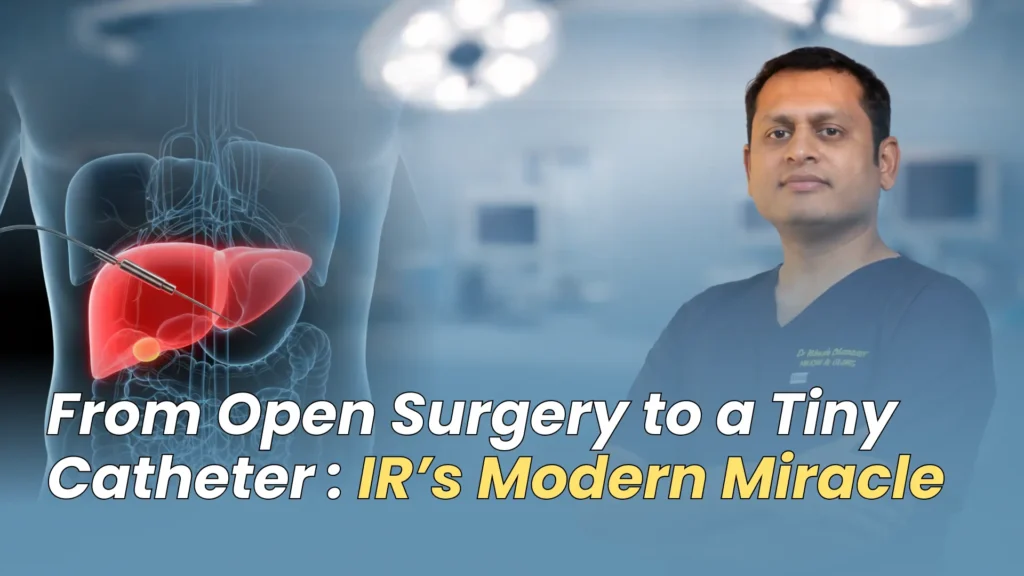
Medicine has changed dramatically over the last few decades. Treatments that once required large surgical cuts, long hospital stays, and weeks of recovery can now be done through a tiny skin puncture. One of the biggest drivers of this shift is Interventional Radiology (IR).
Interventional radiology combines advanced medical imaging with minimally invasive procedures to diagnose and treat a wide range of conditions—often without the need for open surgery. For patients, this means less pain, faster recovery, and safer outcomes.
What Is Interventional Radiology?
Interventional radiology is a medical specialty where doctors use real-time imaging—such as X-ray, ultrasound, CT scan, or MRI—to guide thin instruments like needles, wires, and catheters inside the body to treat disease.
Instead of making large incisions, interventional radiologists work through a small pin-hole entry, usually just a few millimeters wide. These procedures are highly precise and target the affected area directly, while sparing surrounding healthy tissue.
Simply put, interventional radiology turns imaging into treatment, not just diagnosis.
Who Is an Interventional Radiologist?
An interventional radiologist is a specially trained doctor who combines deep knowledge of imaging with hands-on procedural expertise. They are involved in planning, performing, and managing minimally invasive treatments across multiple organ systems.
Unlike traditional surgery, most interventional radiology procedures are performed under local anesthesia +/- mild sedation, making them safer for elderly patients and those with other medical conditions.
Common Conditions Treated With Interventional Radiology in India
Interventional radiology is increasingly used in India to treat a wide range of conditions without major surgery. Some important and commonly performed interventional radiology procedures include:
- Uterine Fibroid Embolization (UFE)
A non-surgical treatment for uterine fibroids that blocks the blood supply to the fibroids, causing them to shrink. UFE is an effective alternative to hysterectomy for many women who wish to preserve their uterus. - Thyroid Ablation
Image-guided ablation is used to treat benign thyroid nodules without open surgery. It helps reduce nodule size and symptoms while preserving normal thyroid tissue. - Thyroid Artery Embolization
A minimally invasive procedure used in selected patients with symptomatic goitre and other thyroid conditions to reduce blood flow to the thyroid gland, leading to reduction in goitre size and improvement in symptoms. This option may be considered even in patients who are at high risk for conventional surgery - Varicocele Embolization
A non-surgical treatment for varicocele, commonly performed in men with infertility or testicular pain. The abnormal veins are blocked using catheters, improving symptoms with minimal downtime. - Varicose Vein Treatment
Interventional radiology offers minimally invasive treatments for varicose veins using image guidance, helping relieve pain, swelling, and skin changes without open surgery. - Prostate Artery Embolization (PAE)
A non-surgical treatment option for benign prostatic enlargement (BPH). PAE reduces prostate size by decreasing blood supply, improving urinary symptoms without prostate surgery. - Genicular Artery Embolization (GAE)
A minimally invasive option for patients with knee osteoarthritis-related pain. By reducing abnormal blood flow and inflammation, GAE helps decrease chronic knee pain without joint replacement surgery. - Musculoskeletal (MSK) Embolization
Used to treat chronic musculoskeletal pain conditions such as tendonitis and joint inflammation by targeting abnormal blood vessels responsible for pain. - Liver Cancer Treatment
Interventional radiology plays a major role in liver cancer care through procedures like tumor ablation and transarterial embolization therapies that directly target cancer while sparing healthy liver tissue.
These treatments allow patients to avoid major surgery, reduce hospital stay, and recover faster, making interventional radiology an important part of modern healthcare in India.
How Interventional Radiology Procedures Are Performed
Most interventional radiology procedures follow a similar process:
- Imaging guidance is used to precisely locate the problem.
- A tiny skin puncture is made, usually in the arm, groin, or directly over the target area.
- Catheters or needles are guided through blood vessels or tissues using live imaging.
- The condition is treated—by opening a blockage, stopping bleeding, destroying abnormal tissue, or delivering targeted therapy.
- The puncture site is closed, often without stitches.
Because the trauma to the body is minimal, patients usually experience less pain and fewer complications.
Benefits of Interventional Radiology
The biggest advantage of interventional radiology is that it achieves results similar to surgery—without the surgical burden.
Key benefits include:
- Smaller incisions or no incisions at all
- Lower risk of infection and complications
- Shorter hospital stay, often same-day discharge
- Faster recovery and return to normal activities
- Reduced pain and scarring
- Safer option for high-risk or elderly patients
For many patients, interventional radiology offers a better balance between effectiveness and safety.
Interventional Radiology vs Traditional Surgery
While surgery is still essential in many situations, interventional radiology is often preferred when:
- The condition can be accessed through blood vessels or image guidance
- Faster recovery is a priority
- Precision treatment is required with minimal tissue damage
- The patient is unfit for major surgery
In many modern hospitals, interventional radiologists work closely with surgeons and physicians, choosing the best approach for each patient rather than replacing surgery entirely.
Why Interventional Radiology Is Growing Rapidly in India
With increasing access to advanced imaging, trained specialists, and modern cath labs, interventional radiology is growing rapidly across India.
Today, IR plays a key role in emergency care, cancer treatment, vascular diseases, and chronic pain management. As awareness improves, more patients are benefiting from safer, minimally invasive treatments.
When Should You Consider Interventional Radiology?
If you or a loved one has been advised surgery, it is often worth asking:
- Is there a minimally invasive interventional radiology option?
In many cases, interventional radiology can either replace surgery or significantly reduce its complexity.
About the Author
Dr Vikash Chennur is the Founder and Medical Director of Vikash IR Clinic, Bangalore.
He completed his MD Radiology at the prestigious All India Institute of Medical Sciences, New Delhi, where he was awarded the Gold Medal by Manmohan Singh in 2009 for being the best radiology postgraduate resident.
Dr Chennur has completed fellowships in Vascular and Interventional Radiology from the University of Ottawa and Body (Abdominal) Imaging from the University of Calgary. He also holds FRANZCR and EBIR qualifications, reflecting extensive international expertise in interventional radiology.