Non-Surgical Fibroadenoma Treatment
- Home / Fibroadenoma Treatment
What Are Breast Fibroadenomas?
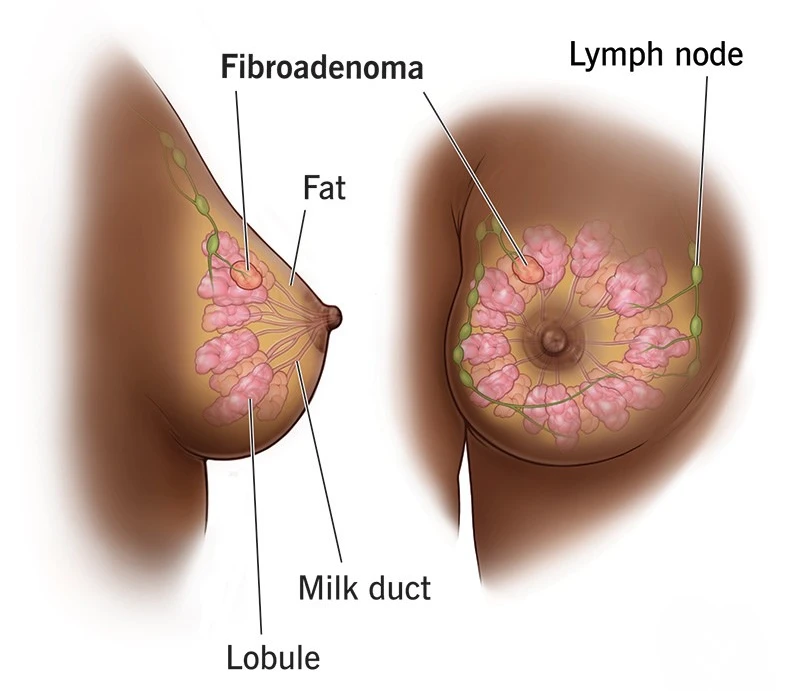
Breast fibroadenomas are common, benign (non-cancerous) breast lumps, especially in young and middle-aged women. They are often detected on self-examination, ultrasound, or routine health check-ups.
Most fibroadenomas are harmless. However, some grow in size, cause discomfort, affect breast appearance, or create ongoing anxiety requiring repeated scans and follow-up.
Symptoms of Fibroadenomas
Treatment may be advised when a fibroadenoma causes symptoms or cosmetic concern.
Common symptoms include
- A palpable or visible breast lump
- Breast pain or tenderness
- Increase in lump size on follow-up
- Cosmetic asymmetry
- Anxiety related to the lump
Why Patients Prefer Minimally Invasive Treatment
- No open surgery
- No visible scar
- No general anesthesia
- Day-care procedure
- Excellent cosmetic outcome
- Fast recovery
- Preserves breast tissue and natural breast shape
This is precise, targeted treatment — treating only what needs to be treated.
Why Choose Vacuum-Assisted & Ablation-Based Fibroadenoma Treatment at Vikash IR Clinic?
Your procedure is performed by Dr. Vikash Chennur, Senior Interventional Radiologist and AIIMS Gold Medalist, with international experience across India, Canada, and Australia. He specializes in image-guided, minimally invasive breast interventions that avoid unnecessary surgery and preserve normal breast tissue whenever possible.
Patients choose this clinic for:
- International standards of care delivered locally in India
- Honest, personalized treatment advice
- Emphasis on cosmetic outcomes and tissue preservation
Procedure Overview & Recovery Timeline
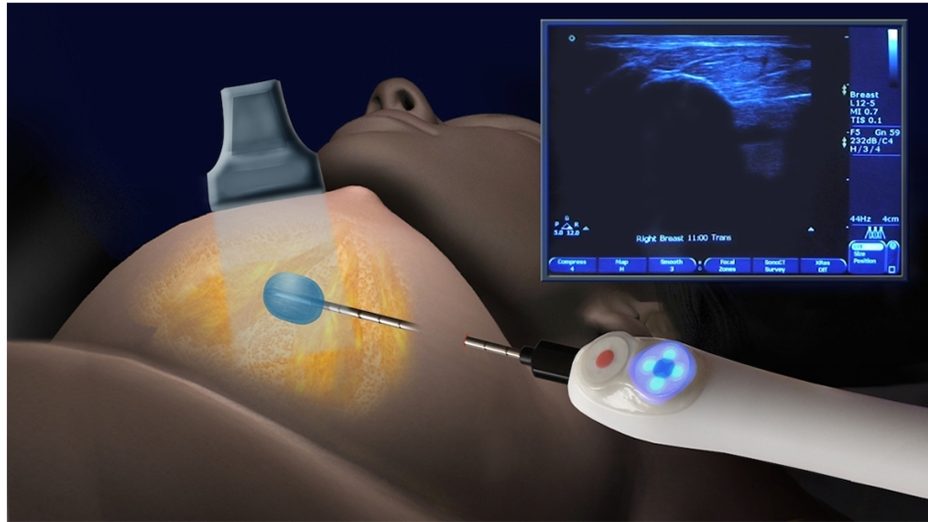
After local anesthesia +/- sedation, under ultrasound guidance a specialized probe is precisely positioned within the fibroadenoma and the treatment is performed. The procedure takes about 45-60min. It is a day-care procedure and patients go back home same-day. Recovery is quick. Mild soreness or bruising may occur for a few days. There are no stitches, and most patients return to normal activities within 24–48 hours.
A specialized probe gently removes the fibroadenoma in small fragments in Vacuum-assisted fibroadenoma removal while a thin probe delivers controlled energy (heat in radiofrequency ablation or freezing in cryoablation) to destroy the lump
Exploring Non-Surgical scar free breast Lump Treatment
Frequently Asked Questions about Minimally Invasive Fibroadenoma Treatment
MRI is recommended when you experience persistent pain, neurological symptoms, or unexplained changes in your body. It helps doctors identify the exact cause and plan accurate treatment with clear internal imaging.
1. What is vacuum-assisted fibroadenoma removal (VAE)?
Vacuum-assisted fibroadenoma removal is a minimally invasive, image-guided procedure performed through a tiny skin puncture under continuous ultrasound guidance, without any surgical incision.
After local anaesthesia, a specialised vacuum-assisted probe is precisely positioned within the fibroadenoma. The lump is gently removed in small fragments while preserving and protecting the surrounding normal breast tissue.
2. What is image-guided fibroadenoma ablation, and who is it suitable for?
In selected patients, fibroadenomas can be treated using image-guided tumour ablation, without physically removing the lump.
Under ultrasound guidance, a thin probe delivers controlled energy to destroy the fibroadenoma tissue—either heat (radiofrequency ablation) or cold (cryoablation). Over time, the treated fibroadenoma gradually shrinks, leading to improvement in symptoms and cosmetic appearance.
This option is particularly useful for:
- Small to moderate-sized fibroadenomas
- Deep or difficult-to-access lumps
- Patients who prefer a no-removal, scar-free treatment
3. Why choose these methods instead of surgery?
These techniques:
- Avoid a surgical scar
- Preserve more breast tissue
- Allow faster recovery
- Usually avoid general anaesthesia
- Provide excellent cosmetic results
4. Who is a good candidate?
You may be suitable if you have:
- Biopsy-confirmed benign fibroadenoma
- Increasing size or symptoms
- Cosmetic concerns
- Preference to avoid surgery
Final suitability is decided after detailed ultrasound and clinical evaluation.
5. Is the procedure safe?
Yes. When performed by an experienced Interventional Radiologist, both vacuum-assisted removal and ablation have an excellent safety profile.
6. Will the lump be completely removed or destroyed?
With vacuum-assisted removal, the lump is usually completely removed and sent for laboratory testing.
With ablation, the lump is destroyed and gradually shrinks over time.
7. Will this affect breastfeeding?
No. Normal breast tissue is preserved and future breastfeeding is not affected.
8. How soon can I return to work?
Most patients resume routine activities within 1–2 days.
9. Can the lump come back?
Recurrence after complete removal or successful ablation is uncommon. New fibroadenomas may develop separately and can be evaluated.