
Transarterial Chemoembolisation
- Home / Transarterial Chemoembolisation
What Is Transarterial Chemoembolisation?
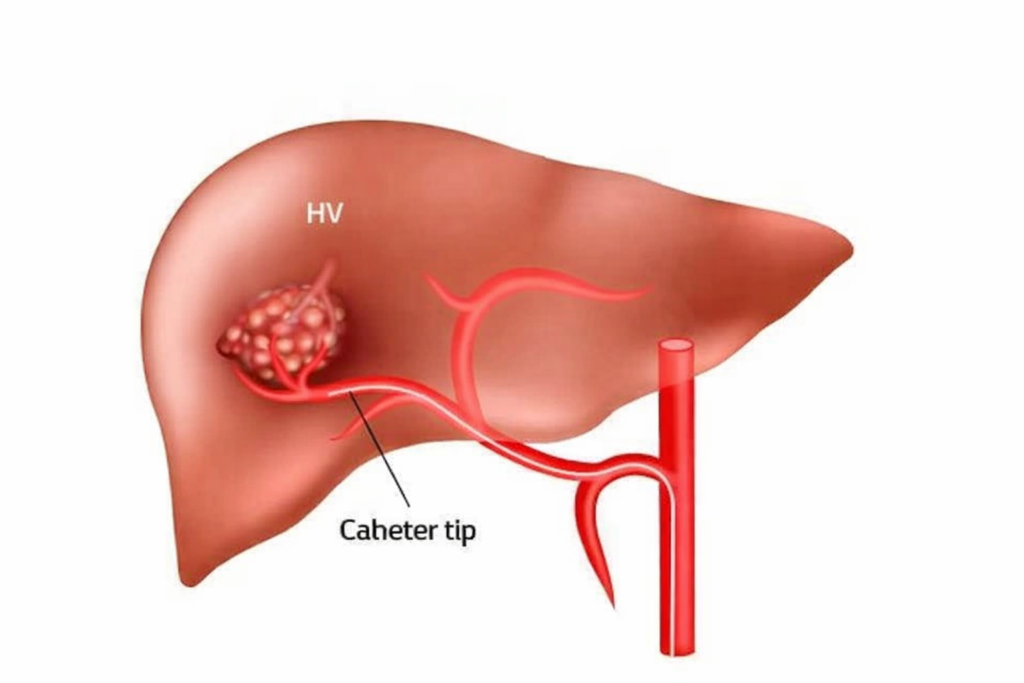
Transarterial Chemoembolisation (TACE) is a minimally invasive, image-guided treatment used primarily for liver cancer, especially hepatocellular carcinoma (HCC). It is commonly recommended when surgery or ablation is not suitable.
Liver tumors receive most of their blood supply from the hepatic artery, whereas healthy liver tissue is supplied mainly by the portal vein. TACE uses this difference to selectively target the tumor.
During the procedure, chemotherapy is delivered directly into the tumor-feeding arteries, followed by embolic agents that reduce blood flow. This traps the chemotherapy within the tumor and deprives it of oxygen and nutrients, limiting tumor growth while reducing systemic side effects.
There are two types of TACE – conventional TACE and drug eluting bead (DEB) TACE
Transarterial Chemoembolisation (TACE)
Targeted, Image-Guided Treatment for Liver Cancer
Who May Benefit From TACE
- Intermediate-stage hepatocellular carcinoma (HCC)
- Liver cancers not suitable for surgery or ablation
- Patients awaiting liver transplantation (bridge therapy)
- Selected cases of liver-dominant metastatic disease
Suitability is determined through detailed imaging and liver function assessment.
Advantages of TACE
Compared to surgery or systemic chemotherapy, TACE offers:
- No open surgery or large incisions
- Targeted delivery of chemotherapy
- Lower systemic side effects
- Preservation of healthy liver tissue
- Shorter hospital stay
- Ability to repeat treatment if required
Why Choose TACE in Bangalore at Vikash IR Clinic?
Dr. Vikash Chennur is a senior Interventional and Abdominal Radiologist and an AIIMS Gold Medalist, with extensive experience in multidisciplinary liver cancer care at leading national and international cancer centers.
At Vikash IR Clinic, each patient’s clinical findings and imaging are reviewed in detail to decide on the most appropriate, evidence-based option —focused on achieving the best possible outcomes while preserving liver function and quality of life.
Care is coordinated with hepatologists, oncologists, and transplant teams when required.
Procedure Overview & Recovery
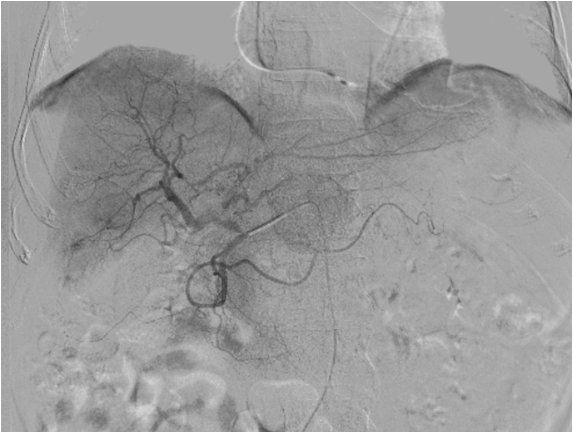
Transarterial Chemoembolization (TACE) is a minimally invasive, image-guided procedure used to treat liver tumors. Through a tiny catheter placed in an artery, targeted chemotherapy is delivered directly to the tumor, followed by embolization to block its blood supply—maximizing tumor control while minimizing effects on the rest of the body.
- Access: small puncture in the wrist or groin
- Duration: approximately 1–2 hours
- Anaesthesia: local anesthesia with sedation
- Hospital stay: usually 1–2 days
Temporary fever, abdominal discomfort, or fatigue may occur after the procedure and are managed with medications. Most patients resume routine activities within a few days.
Exploring liver cancer treatment ?
Frequently Asked Questions About Image-Guided Cancer Ablation
MRI is recommended when you experience persistent pain, neurological symptoms, or unexplained changes in your body. It helps doctors identify the exact cause and plan accurate treatment with clear internal imaging.
1. Is TACE a form of chemotherapy?
TACE delivers chemotherapy directly into the liver tumour, not throughout the body, reducing systemic exposure.
2. Can TACE cure liver cancer?
TACE can be curative in small tumors, but is usually not curative treatment. It definitely controls tumour growth and improves outcomes in selected patients.
3. How many TACE sessions are required?
This depends on tumour response and liver function. Some patients may require more than one session.
4. Will TACE affect liver function?
Preserving liver function is a priority. Liver tests are closely monitored before and after treatment.
5 . Can TACE be combined with liver tumor ablation?
Transarterial Chemoembolisation (TACE) can be combined with image-guided liver tumor ablation. This combined approach can improve local tumour control in appropriately selected cases and is decided based on tumour characteristics, liver function, and imaging findings.
6. Can TACE be combined with systemic therapies such as targeted therapy or immunotherapy?
TACE can be used alongside systemic treatments, in selected patients with liver cancer.
7. What are the different types of TACE (C-TACE and DEB-TACE) used in liver cancer treatment?
Conventional TACE (C- TACE)
Conventional TACE (C-TACE) is the traditional and widely used form of transarterial chemoembolisation for liver cancer. In this approach, chemotherapy is mixed with an oily contrast agent and delivered directly into the arteries supplying the liver tumour, followed by embolic materials to reduce blood flow. This combination allows high local chemotherapy concentration within the tumour while limiting exposure to the rest of the body. cTACE has been used for several decades and remains an effective option for appropriately selected patients.
Drug-Eluting Bead TACE (DEB-TACE)
Drug-Eluting Bead TACE (DEB-TACE) is an advanced form of chemoembolisation in which microscopic beads loaded with chemotherapy are delivered directly into the tumour-feeding arteries. These beads slowly release the drug over time while simultaneously blocking blood flow to the tumour. This controlled drug delivery helps maintain sustained tumour exposure with potentially fewer systemic side effects, making DEB-TACE a suitable option for selected patients based on tumour characteristics and liver function.