Do Thyroid Nodules Always Need Surgery?
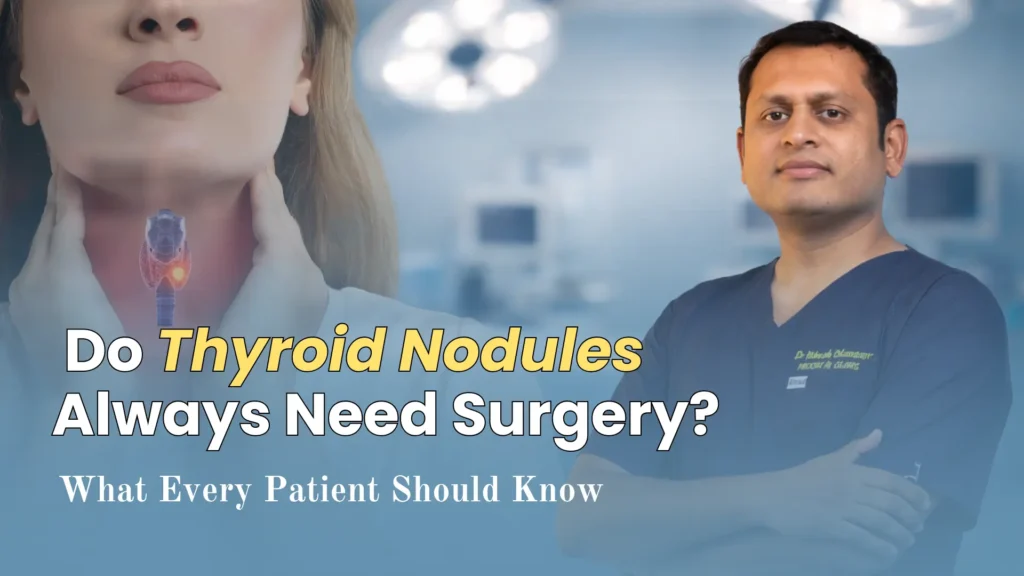
When to Observe, Ablate, or Treat
Thyroid nodules are a very common finding, especially as people grow older. Many are discovered incidentally during an ultrasound or CT scan done for another reason. While the word “nodule” can sound alarming, the reality is reassuring—most thyroid nodules are benign and do not require surgery.
Understanding what thyroid nodules are, why they develop, and when treatment is truly necessary can help patients make informed decisions and avoid unnecessary procedures.
What Is a Thyroid Nodule?
A thyroid nodule is a lump that forms within the thyroid gland, located at the front of the neck. Nodules may be solid, fluid-filled, or mixed. Some people develop a single nodule, while others have multiple nodules.
In many cases, thyroid nodules:
- Do not affect thyroid hormone levels
- Cause no symptoms
- Remain stable in size for years
Why Do Thyroid Nodules Develop?
The exact cause is not always clear. Factors that may contribute include:
- Genetic predisposition
- Hormonal influences
- Iodine imbalance
- Long-term stimulation of thyroid tissue
Thyroid nodules are more common in women and tend to increase in frequency with age. Some nodules grow slowly, while many remain unchanged over long periods.
Are Thyroid Nodules Cancerous?
The majority of thyroid nodules are benign. When a nodule is detected, ultrasound imaging is used to assess its size, structure, and risk features.If needed, a fine needle aspiration biopsy (FNAB) may be performed to evaluate for cancer cells. While biopsy is a valuable diagnostic tool, its accuracy can be lower in larger nodules or nodules with mixed solid and cystic components.
Do All Thyroid Nodules Need Treatment?
No. Most thyroid nodules do not need immediate treatment or removal.
Management depends on:
- Nodule size
- Growth over time
- Ultrasound characteristics
- Biopsy results
- Presence of symptoms
- Patient preference
Many benign nodules can be safely monitored with regular clinical review and ultrasound follow-up.
When Does Nodule Size Matter?
Size is an important consideration, but size alone does not automatically mean surgery.
Nodules larger than 4 cm are often considered for removal, particularly if:
- Biopsy results are indeterminate
- The nodule is growing
- Symptoms are present
Larger nodules may carry a slightly higher risk of malignancy, and biopsy results in these nodules can have a higher false-negative rate. For these reasons, intervention may sometimes be advised.
Symptoms That May Require Treatment
Even benign nodules may need treatment if they cause symptoms such as:
- Difficulty swallowing
- Breathing discomfort or pressure
- Hoarseness or voice changes
- Visible neck swelling or cosmetic concern
In these situations, treatment aims to relieve symptoms and improve quality of life.
Cancer Risk and Thyroid Nodules
Nodules that are confirmed or strongly suspected to be cancerous usually require surgical removal. When detected early, thyroid cancer has excellent treatment outcomes. If cancer risk is uncertain, careful monitoring over time may be recommended to avoid unnecessary surgery.
Treatment Options for Thyroid Nodules
Treatment is not the same for every patient. The approach depends on individual clinical factors and patient preference. Importantly, surgery is no longer the only effective option for many benign thyroid nodules.
Observation and Regular Follow-Up
Small, benign, and asymptomatic nodules often require no immediate treatment. Regular ultrasound scans and clinical review are sufficient. Many nodules remain stable for years without causing problems.
Medication Management
Medications may be prescribed if thyroid hormone levels are abnormal. These medicines help regulate hormone levels but usually do not shrink the nodule itself, making them a limited long-term solution for nodule size reduction.
Fine Needle Aspiration Biopsy
This minimally invasive test uses a thin needle to collect cells from the nodule for analysis. It helps determine whether a nodule is benign or malignant and guides further management. It is a diagnostic tool, not a treatment.
Thyroid Nodule Ablation—A Non-Surgical Option
Thyroid nodule ablation is a minimally invasive, non-surgical treatment for benign thyroid nodules that cause symptoms such as neck discomfort, swallowing difficulty, or visible swelling.
- Performed under ultrasound guidance
- A specialised needle delivers controlled heat into the nodule
- The nodule gradually shrinks while preserving healthy thyroid tissue
Over time, symptoms improve significantly. Most patients experience relief without surgery, stitches, or scars, making ablation an attractive option for those wishing to avoid major surgery and prolonged recovery.
Thyroid Nodule Embolisation
Thyroid nodule embolisation is another non-surgical treatment that works by reducing the blood supply to the nodule. As blood flow decreases, the nodule gradually shrinks.
This approach is particularly useful for:
- Large benign nodules
- Nodules with increased blood flow
As the nodule reduces in size, symptoms such as pressure, discomfort, and visible swelling often improve. Embolisation preserves the thyroid gland and involves minimal downtime, making it suitable for patients who are not ideal surgical candidates or prefer less invasive treatment.
Key Takeaway
Most thyroid nodules are harmless and do not need to be removed. Treatment is recommended only when a nodule is:
- Large or growing
- Causing symptoms
- Showing concern for cancer
Today, many patients can avoid surgery. Minimally invasive treatments such as thyroid nodule ablation and thyroid nodule embolisation can effectively shrink benign nodules, relieve symptoms, and preserve normal thyroid function.
With proper evaluation and the right treatment choice, thyroid nodules can be managed safely and comfortably often without major surgery.
About the Author
Dr Vikash Chennur is the Founder and Medical Director of Vikash IR Clinic, Bangalore.
He completed his MD Radiology at the prestigious All India Institute of Medical Sciences, New Delhi, where he was awarded the Gold Medal by Manmohan Singh in 2009 for being the best radiology postgraduate resident.
Dr Chennur has completed fellowships in Vascular and Interventional Radiology from the University of Ottawa and Body (Abdominal) Imaging from the University of Calgary. He also holds FRANZCR and EBIR qualifications, reflecting extensive international expertise in interventional radiology.