
Genicular Artery Embolization
- Home / Genicular Artery Embolization
What Is Genicular Artery Embolization?
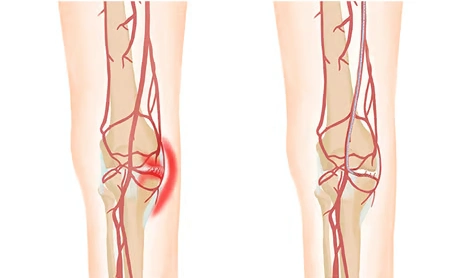
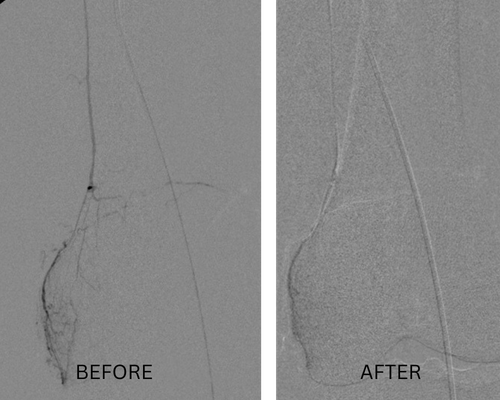
Genicular Artery Embolization (GAE) is a minimally invasive, image-guided treatment used to relieve chronic knee pain caused by knee osteoarthritis. In osteoarthritis, abnormal inflammation and increased blood flow around the knee joint contribute to pain and swelling. GAE works by selectively reducing this abnormal blood supply, helping to decrease inflammation and pain.
GAE does not involve surgery on the knee joint and does not require implants or joint replacement. It is increasingly considered for patients who continue to have knee pain despite medications, physiotherapy, or injections, and who wish to delay or are unfit for knee replacement surgery.
A detailed imaging assessment is essential to confirm suitability and to plan targeted treatment.
Symptoms That May Benefit From GAE
Genicular artery embolization may be advised when knee pain begins to interfere with daily activities or mobility.
Common symptoms include:
- Chronic knee pain due to osteoarthritis
- Pain that worsens with walking or standing
- Knee swelling or stiffness
- Reduced range of motion
- Pain not adequately controlled with medications or physiotherapy
Why Choose Genicular Artery Embolization at Vikash IR Clinic?
Management of knee osteoarthritis depends on symptom severity, imaging findings, and functional limitation. At Vikash IR Clinic, GAE is performed by an experienced gold medalist Interventional Radiologist using real-time imaging to ensure precise targeting and safe treatment. This is only performed after a careful imaging-based and clinical evaluation confirms that it is an appropriate option.
While pain medications, injections, and surgery remain standard treatments in many cases, GAE offers a minimally invasive alternative for selected patients. The focus is on correct patient selection, precise procedural planning, and coordination with orthopedic specialists when required.
Procedure Overview & Recovery Timeline
Genicular artery embolization is performed through a small puncture in the groin or foot without any surgical incision. Using real-time imaging guidance, a thin catheter is navigated to the small arteries supplying the inflamed areas around the knee. Tiny embolic particles are then delivered to reduce abnormal blood flow and inflammation.
The procedure typically takes one to two hours and is performed under local anesthesia with mild sedation. Most patients are observed briefly and can usually return home the same day.
Recovery is generally quick. Mild knee discomfort or swelling may occur temporarily and is managed with medications. Most patients can resume normal daily activities within a few days, with gradual improvement in pain and function over the following weeks. Follow-up clinical evaluation and imaging may be advised to assess treatment response.
Exploring Genicular Artery Embolization?
Frequently Asked Questions About Genicular Artery Embolization (GAE)
MRI is recommended when you experience persistent pain, neurological symptoms, or unexplained changes in your body. It helps doctors identify the exact cause and plan accurate treatment with clear internal imaging.
1. What is Genicular Artery Embolization?
Genicular Artery Embolization is a minimally invasive, image-guided treatment used to reduce chronic knee pain caused by osteoarthritis.
2. Is GAE a surgical procedure?
No. GAE is a non-surgical treatment performed through a small puncture in the wrist or groin, without opening the knee joint.
3. Who may benefit from GAE?
GAE may be considered for patients with knee osteoarthritis who continue to have pain despite medications, physiotherapy, or injections.
4. How does GAE reduce knee pain?
GAE works by reducing abnormal blood flow to inflamed areas around the knee, which helps decrease inflammation and pain.
5. Will GAE cure knee osteoarthritis?
GAE does not cure osteoarthritis, but it can significantly reduce pain and improve function in selected patients.
6. How long does the procedure take?
The procedure usually takes one to two hours and is performed under local anesthesia with mild sedation.
7. How soon can I walk after GAE?
Most patients can walk the same day and resume normal daily activities within a few days.
8. When will I notice pain relief?
Pain relief is often gradual, with improvement noticed over weeks following the procedure.
9. Can GAE delay knee replacement surgery?
For many patients, GAE can help delay or reduce the need for knee replacement surgery.
10. How is eligibility for GAE decided?
Eligibility is determined through clinical evaluation and imaging to ensure the procedure is appropriate and safe.