Image-Guided Cancer / Tumor Ablation
- Home / Image-Guided Cancer / Tumor Ablation
What Is Image-Guided Cancer Ablation?
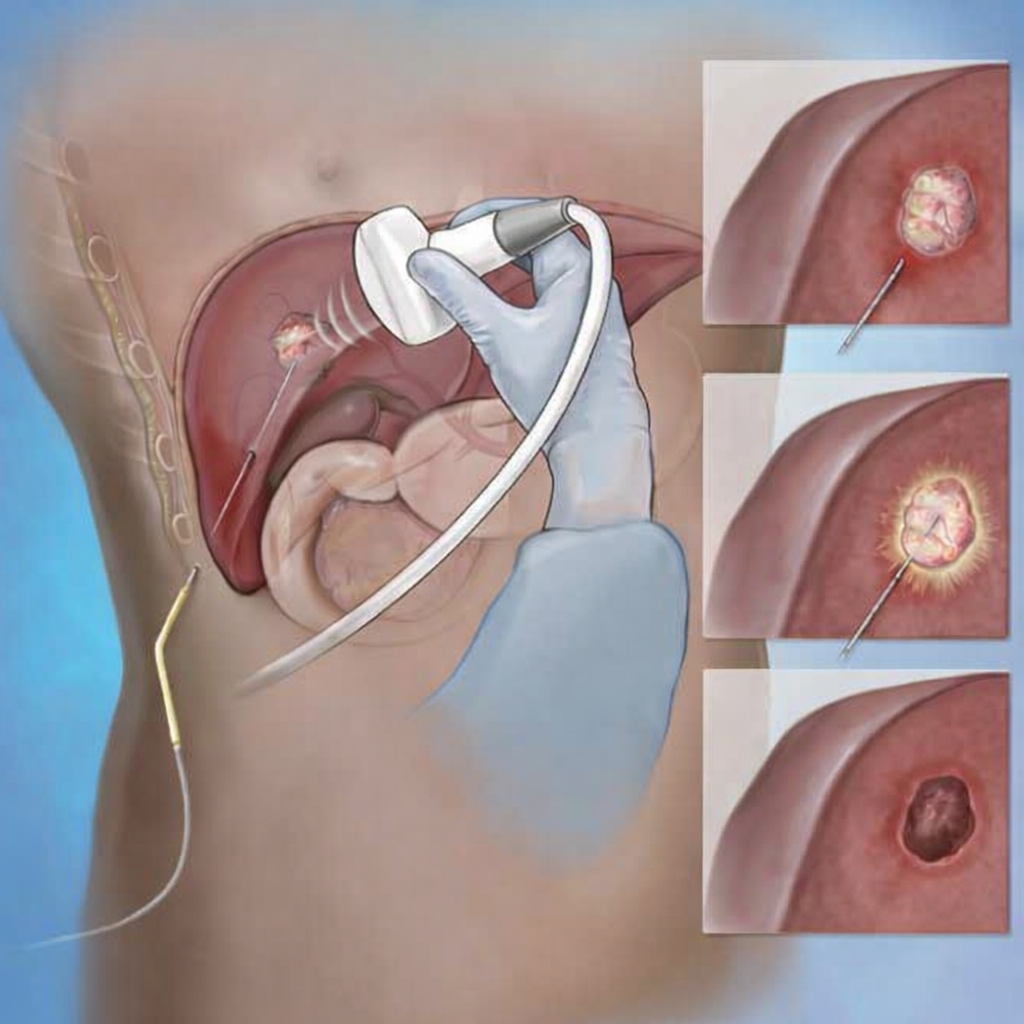
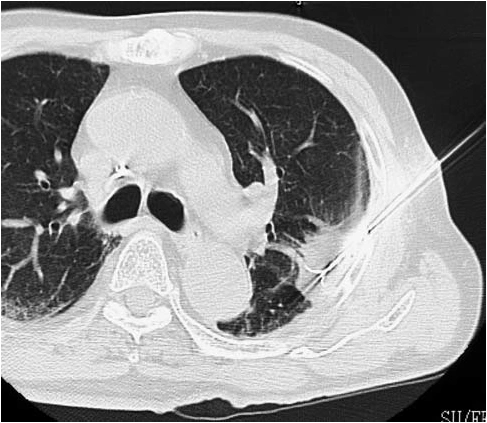
Image-guided cancer ablation is a minimally invasive, non-surgical treatment used to destroy selected cancers by precisely delivering heat energy directly into the tumour under real-time imaging guidance such as ultrasound or CT.
Instead of removing the tumour through open surgery, ablation targets and destroys cancer cells from within, while preserving surrounding healthy tissue and organ function.
This approach allows effective cancer control with less pain, fewer complications, and faster recovery.
A detailed imaging evaluation is essential to determine whether cancer ablation is an appropriate and safe option for each patient.
When Is Cancer Ablation Considered?
Cancer ablation may be advised when the tumour is localised and symptoms or disease progression require active treatment.
Why Patients Prefer Image-Guided Cancer Ablation
- No large surgical incision
- No removal of the organ
- Targeted treatment with preservation of healthy tissue
- Usually performed under local anesthesia with sedation
- Short hospital stay and faster recovery
- Can be repeated or combined with other cancer treatments
Common scenarios include:
- Small, well-defined tumours
- Patients unfit for surgery due to medical conditions
- Patients wishing to avoid major surgery
- Recurrent or residual tumours after prior treatment
- Tumours where organ preservation is important
Why Choose Image-Guided Cancer Ablation at Vikash IR Clinic?
Cancer treatment is not one-size-fits-all. At Vikash IR Clinic, image-guided cancer ablation is offered only after careful clinical and imaging-based evaluation confirms it is the most suitable option.
The procedure is performed by an experienced Interventional Radiologist using advanced imaging to ensure:
- Precise tumour targeting
- Selection of the most appropriate ablation technique
- Maximum tumour destruction
- Protection of critical surrounding structures
Care is coordinated with oncologists and surgeons when required, ensuring a multidisciplinary, patient-centred approach to cancer treatment.
Procedure Overview & Recovery Timeline
Image-guided cancer ablation is performed through a tiny skin puncture, without any surgical incision.
- Anesthesia: Local anesthesia with sedation or general anesthesia (depending on tumour location)
- Procedure time: Typically 30–120 minutes
- Hospital stay: Usually overnight observation
Recovery is generally smooth. Mild pain, soreness, or low-grade fever may occur temporarily and are managed with medications.
Most patients return to normal activities within a few days. Follow-up imaging is used to assess treatment response.
Is image-guided cancer ablation right for you?
Frequently Asked Questions About Image-Guided Cancer Ablation
MRI is recommended when you experience persistent pain, neurological symptoms, or unexplained changes in your body. It helps doctors identify the exact cause and plan accurate treatment with clear internal imaging.
1. What is image-guided cancer ablation?
Image-guided cancer ablation is a minimally invasive, non-surgical procedure that destroys selected tumours by delivering controlled heat directly into the cancer using real-time imaging such as ultrasound or CT.
2. Is cancer ablation a surgical procedure?
No. Cancer ablation is not surgery. It is performed through a tiny skin puncture, without any large incision or removal of the organ.
3. What types of cancers can be treated with ablation?
Ablation is commonly used for selected liver, kidney, lung, and bone tumours, as well as certain benign tumours causing symptoms. Not all cancers are suitable, and careful evaluation is essential.
4. How long does the procedure take?
The procedure usually takes 30 to 120 minutes, depending on the tumour size, number, and location.
5. How long is the recovery period?
Most patients experience mild pain or soreness for a short period and can return to normal activities within a few days. Hospital stay is usually short, often overnight.
6. Will I need additional cancer treatment after ablation?
Some patients may require additional or combined treatments such as chemotherapy, embolization, or surgery. Ablation can also be repeated if new lesions appear. Follow-up imaging helps guide further care.
7. How is eligibility for cancer ablation decided?
Eligibility is determined through detailed imaging studies, tumour characteristics, overall health assessment, and discussion within a multidisciplinary team when needed.
8. Which tumors can be treated with Image‑guided ablation?
Image-guided ablation may be considered for selected benign and malignant tumours, including:
- Liver cancer (primary or metastatic)
- Kidney cancer
- Lung cancer
- Painful bone tumours and metastases
- Selected benign tumours causing symptoms
Eligibility depends on tumour size, location, number, and overall patient health.